
On this page
The fastest way to turn LinkedIn post engagement into leads is to treat every comment and reaction as a hand raised in public. Collect the people who engage with posts about your problem, drop the ones who will never buy, and message the rest about the thing they just engaged with.
I ran it at my day job in August and September, and we tracked every step in lemlist. Below are the real numbers and the exact steps.
How did the engager campaign compare with our cold lists?
The only real difference between the two was where the names came from.
| Cold lists (7 campaigns) | Engager list (1 campaign) | |
|---|---|---|
| Where the names came from |  Apollo Apollo  LinkedIn LinkedIn |
 Parasite Parasite |
| People reached | 458 | 533 |
| Connection requests sent | 400 | 361 |
| Accepted | 63 (16%) | 232 (64%) ↑ 4x |
| Replied | 1 (0.2%) | 88 (16.5%) ↑ 75x |
All numbers are lifetime stats from lemlist as of October 16, 2026. 172 of the 533 engagers were already connected to us, so they got a message instead of a request.
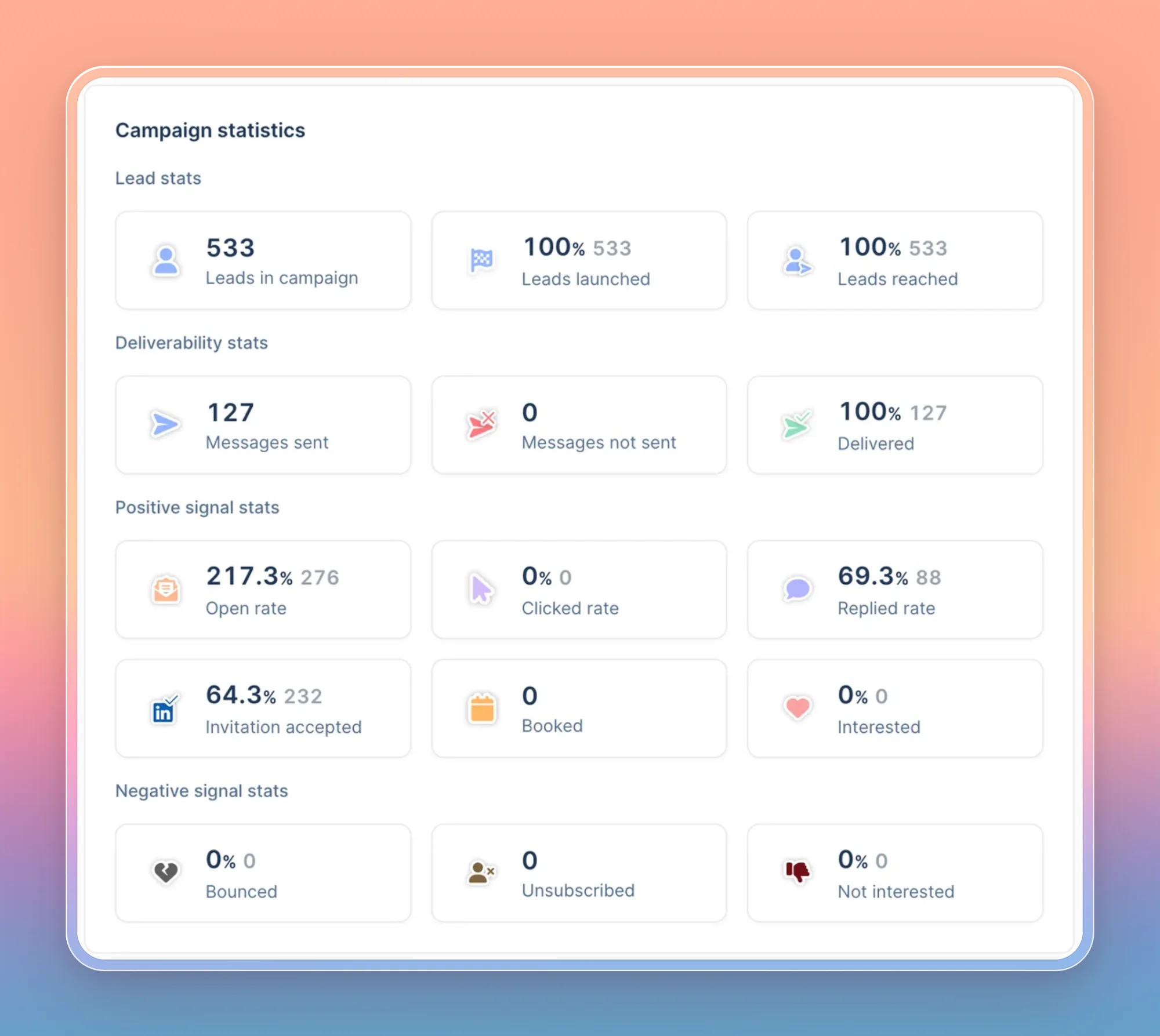
The engager campaign in lemlist. "Booked" shows 0 because we booked calls outside lemlist.
That's four times the accept rate and about 75 times the reply rate.
To be fair to the cold lists, they ran over several months with a few different offers, so treat the comparison as rough. But I've rewritten a lot of cold copy in my time, and no rewrite turns 1 reply into 88.
Why do post engagers reply so much more?
Because they told you what they care about this week.
A cold list is a guess. Someone matches your job title and company size filters, but you have no idea whether your problem is anywhere near their mind.
An engager stopped scrolling on a post about your exact problem and clicked a button or typed a comment. You know the topic. You know the timing. Often you even know their opinion. Wouldn't you rather start the conversation there than from their job title?
❌ "Hi Priya, I see you're Head of Growth at a fast-growing brand. We help teams like yours…"
✅ "Hi Priya, saw your comment on the server-side tracking post. Are you still stitching Meta and Shopify numbers together by hand?"
The second message isn't a pitch. It continues a conversation she started.
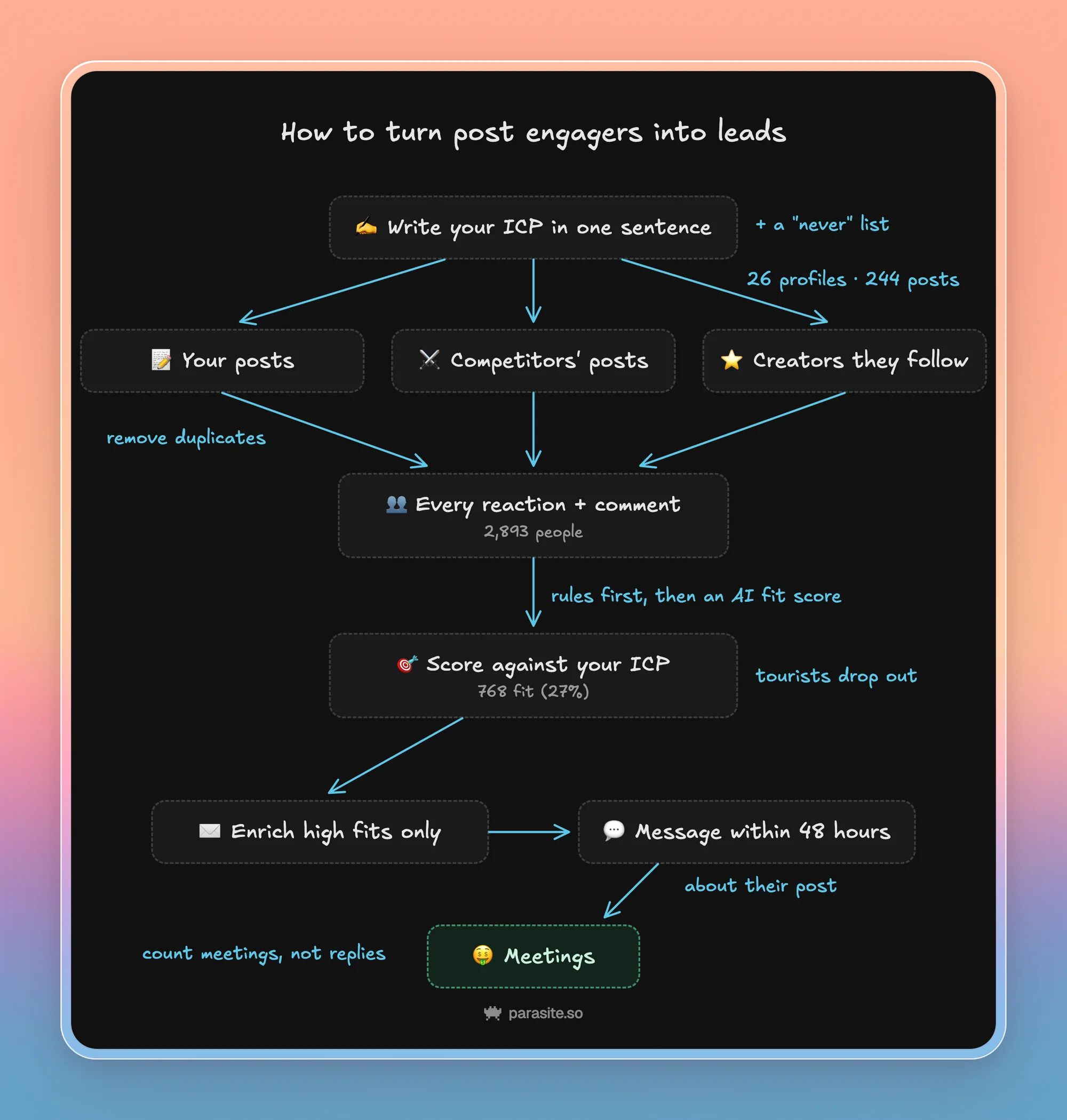
The whole play on one page. Each step below covers one box.
Step 1: Write your ICP in one plain sentence
Before you pull a single name, write down who buys from you. One or two sentences.
Bad: "Ecommerce companies." Good: "Shopify brands doing $1M+ a year and the agencies that run their Meta ads. Not freelancers, not SaaS vendors, not job seekers."
I know, it feels too simple to matter. It isn't. This sentence filters everything after it.
Add a short "never" list too: headline words that mean someone will never buy, like "student", "open to work", "recruiter", or your competitors' names.
In Parasite you paste the sentence, or let it draft one from your website, and every engager gets scored against it.
If you can't say who buys in one sentence, no tool will figure it out for you.
Step 2: Pick whose posts to watch
There are three places to find engagers:
- Your own posts. The warmest leads, because they already know you.
- Competitors' posts. People engaging with a competitor are thinking about the problem right now.
- Creators your buyers follow. The biggest pool. If you sell to media buyers, watch the 10 creators every media buyer reads.
We watched 26 profiles and pulled their 244 most recent posts.
Pro-tip: to find the creators, open the profiles of 5 of your best customers and scroll their recent activity. Note whose posts they keep reacting to. The same names come up fast.
Step 3: Pull every reaction and comment
For each post you want every person who reacted or commented: name, headline, company, profile URL, and the comment text if there is one.
By hand this works for one post. It breaks long before 244. (Ask me how I know.) Parasite now does it every day for the profiles on your Watchlist.
We ended up with 2,893 unique people. Remove duplicates by profile URL. The same person often engages with several posts, and that repeat count matters later.
Step 4: Score before you enrich anyone
Here's the part nobody likes to hear: most engagers will never buy from you.
Every comment section has the same five groups:
- Other creators looking for reach
- Vendors selling to the same audience
- Job seekers
- Students
- Buyers
In our list, 768 of 2,893 people (27%) fit our ICP. The other 73% were tourists.
So score first, and only go after the people who pass:
- Rules pass. Drop anyone whose headline hits your "never" list.
- AI pass on the rest. A model reads the headline, company and comment against your ICP sentence and returns a 0–100 score with reasons.
- Enrich only the top tier. Look up emails for the high-fit people and nobody else.
If you enrich all 2,893, you end up with more than 2,000 emails you will never send.
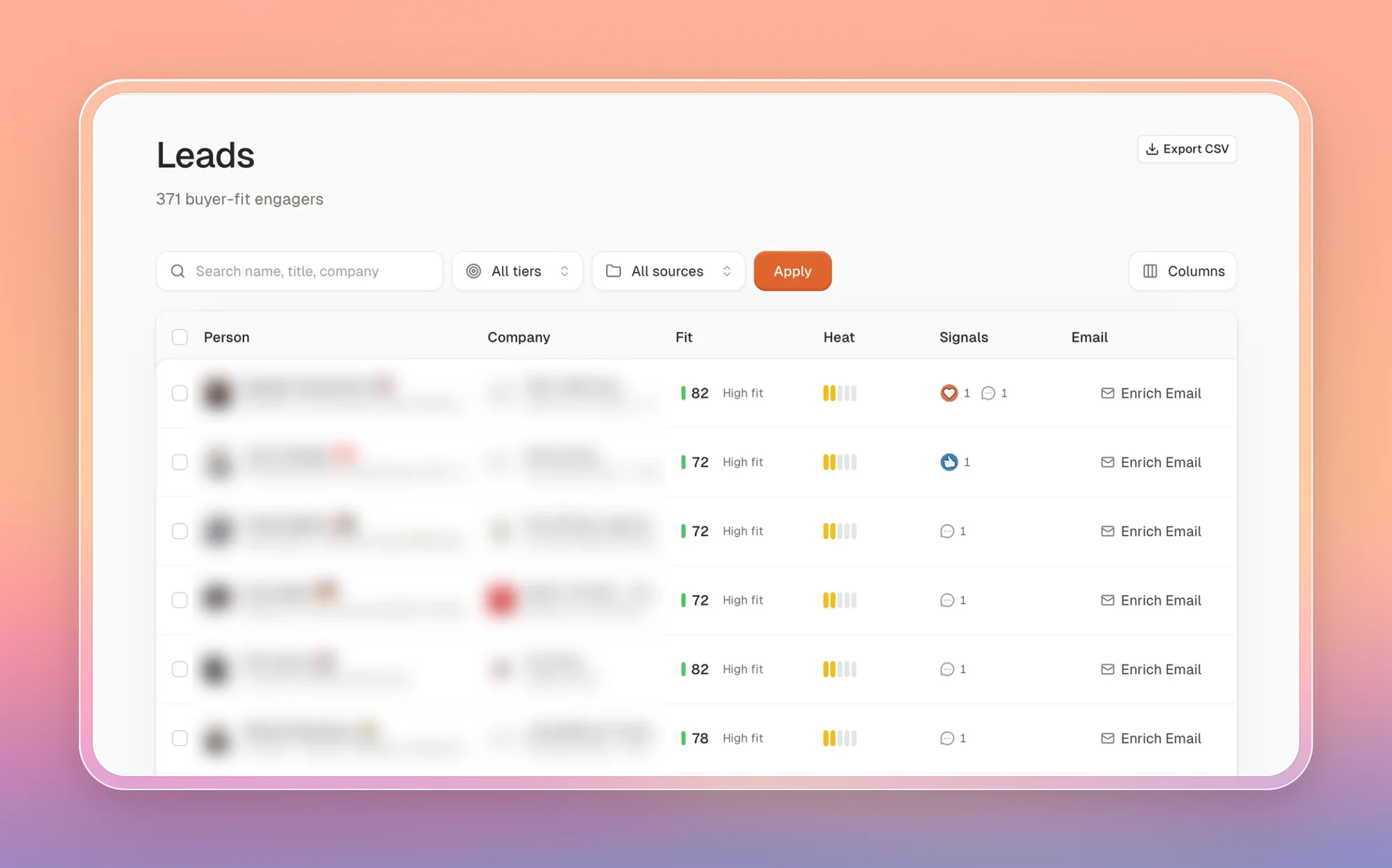
Parasite's Leads page: engagers ranked by fit, with their signals. You enrich emails one row at a time, only for the people worth it. Names blurred.
Every score should come with a reason you can check. A number with no reason is just a vibe. Here's my own profile, scored against Parasite's ICP:
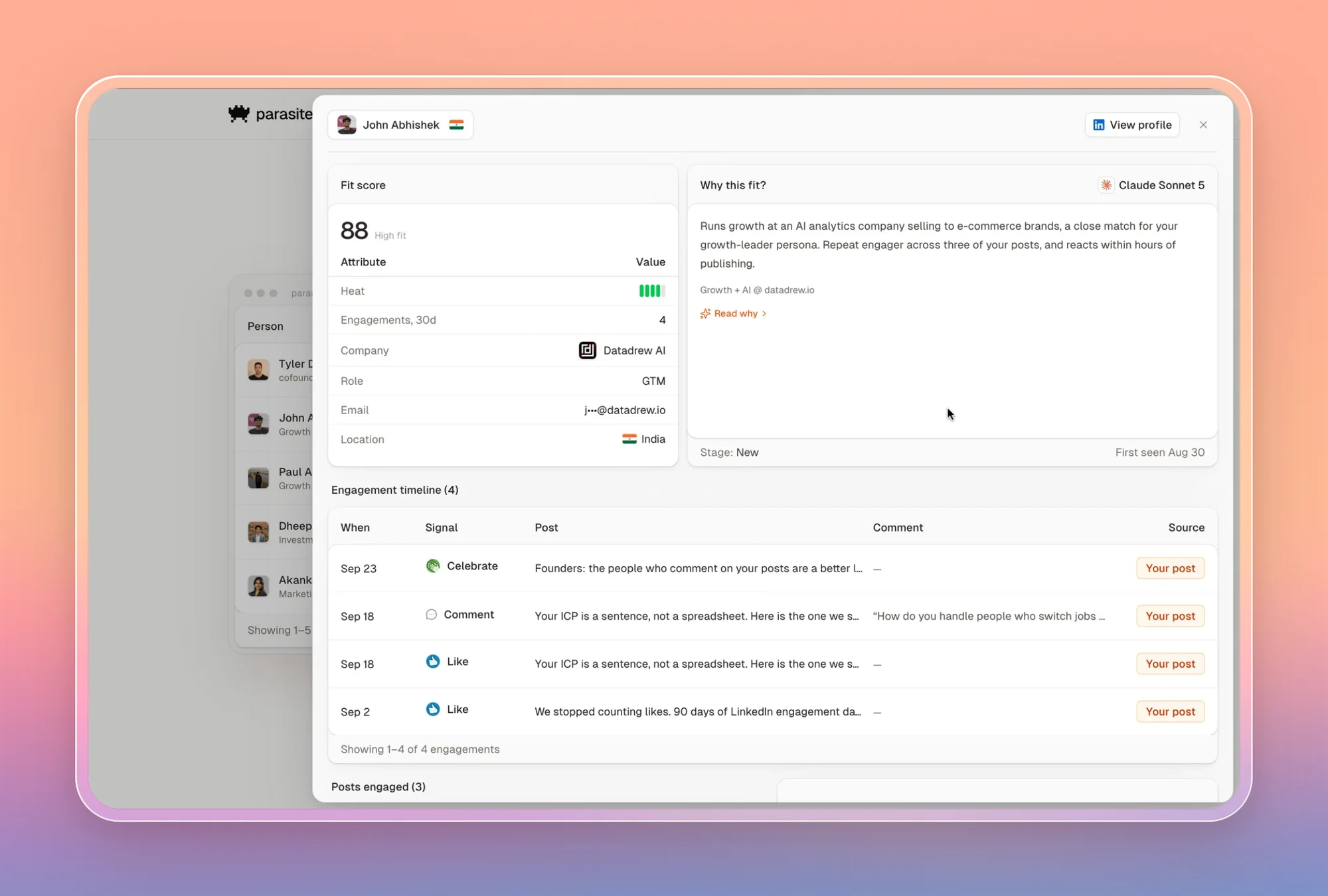
The fit score, the reason behind it, and every post the person engaged with.
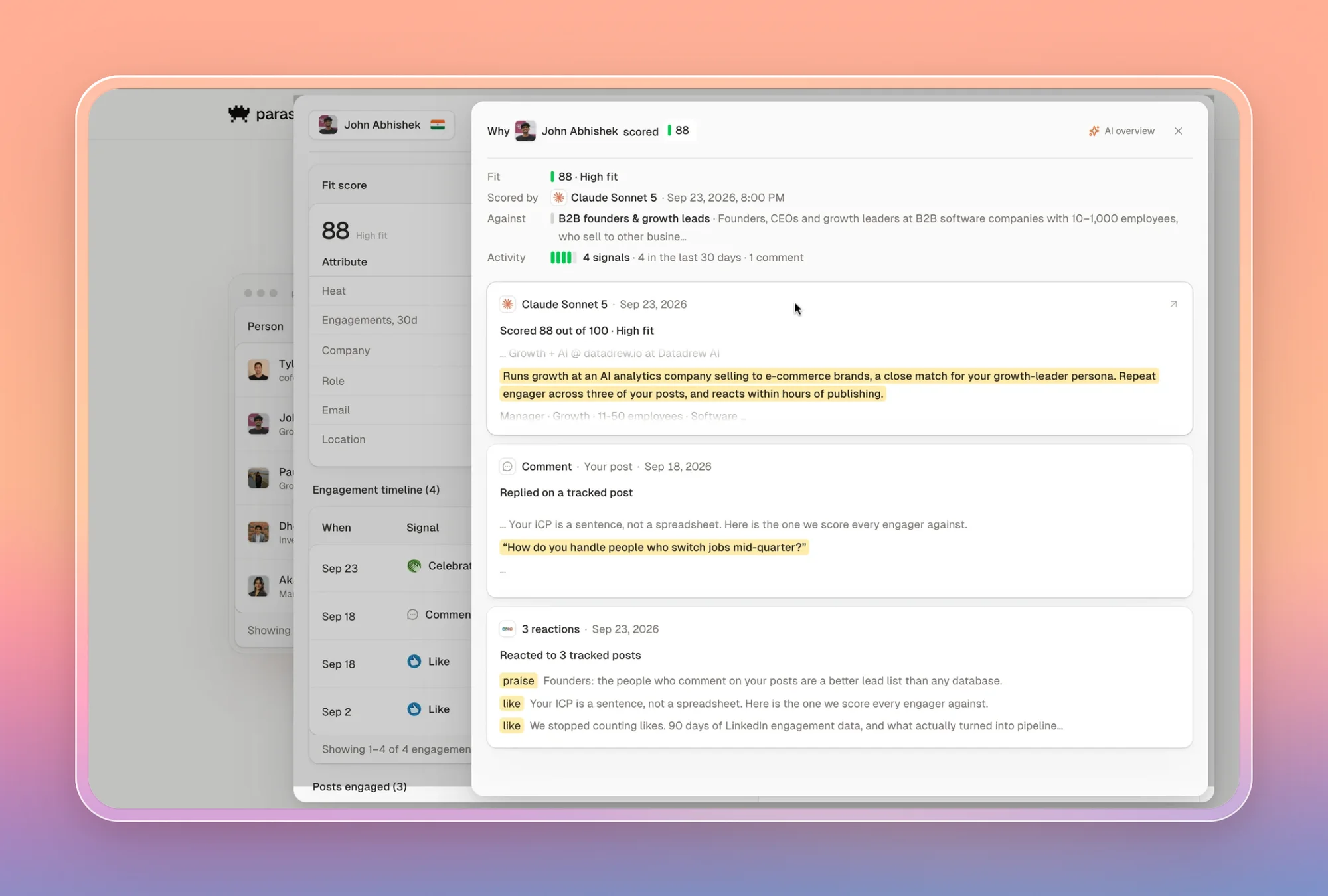
"Read why" shows the evidence: the ICP, their headline and company, the comment they left, and each reaction.
Score everyone. Enrich the few.
Step 5: Message within 48 hours, about what they engaged with
Our sequence had two steps, both on LinkedIn:
- Connection request with one curious question about how they handle the thing the post was about. No pitch, no product name.
- After they accept: send what they raised their hand for. The post was about a Claude setup for ad reporting, so the message was the setup itself: three links and a 10-minute guide.
Speed matters. Two days after a post, people still remember it. Two weeks later, they don't.
And the question in the connection request did most of the heavy lifting. 82 of the 88 replies came straight after the request was accepted, before our second message was even sent.
The playbook
- Write your ICP in one sentence, plus a "never" list.
- Watch 20–30 profiles: yours, your competitors', and the creators your buyers follow.
- Pull every reaction and comment, and remove duplicates.
- Score everyone before you enrich anyone.
- Rank comments first, then repeat engagers, then reactions.
- Open with a question about the topic they engaged with. No pitch.
- Deliver the thing you promised in the second message, within 24 hours.
- Count meetings, not replies. Track which posts brought buyers, and watch more posts like them.
Frequently asked questions about turning LinkedIn engagers into leads
Is it OK to message people who engaged with a competitor's post?
Yes, as long as you're useful and not creepy. Don't say "I saw you liked my competitor's post." Ask about the problem the post was about. They engaged in public, and you're starting a conversation about that topic.
How many posts do I need to watch to get a real list?
We got 2,893 unique people from 244 posts across 26 profiles. Start with 20–30 profiles. If your niche is small, add more creators your buyers follow before you add more competitors.
Should I message reactions or only comments?
Both, but rank comments first. A comment tells you what someone thinks, which makes the first message much easier to write. Repeat engagers come next, then single reactions.
Why not just buy a lead list?
You can, and it will match your filters. Our cold lists got 16% accepted and 1 reply from 458 people. A list of engagers is smaller, but every name on it just told you they care about the problem.
Try it on your own posts
If you run this play, I'd love to hear how it goes, especially the replies that surprised you. Find me on LinkedIn and tell me what worked.